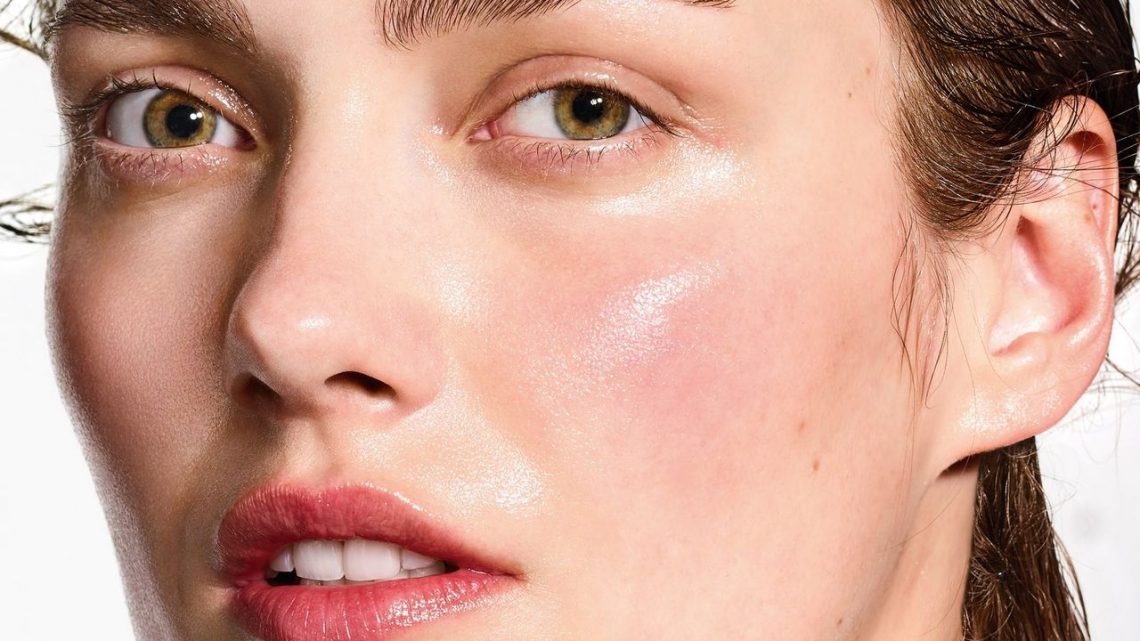
9 Best Hydrogel Masks For Glass Skin, According To Experts
The hallmark of every overnight shed or self-care day, the best face hydrogel masks create a hydrating, occlusive environment that helps the skin absorb active ingredients more effectively.
Vogue’s pick of the best hydrogel masks at a glance:
Unlike traditional sheet masks, hydrogel formulas form a liquid second skin that locks in moisture and delivers ingredients like hyaluronic acid and antioxidants deep into the skin. As the gel warms from your body heat, it releases even more nutrients, leaving the skin nourished, plump, and hydrated.
Below, we asked the experts to share their take on what makes a great hydrogel mask. The result is a cohesive list of nine options across skin types, price points, and key ingredients, whether you’re after hydration, brightness, or that “have you been to Korea recently?” glow. We also asked about the benefits, how long to keep each mask on (some are overnight options!), and how often to use them. Godspeed!
In this article:
Best overall: Biodance Bio Collagen Real Deep Mask

Biodance
Bio Collagen Real Deep Mask
- Why it’s Vogue-approved: You might recognise this mask from its many viral moments on TikTok, but it’s especially loved by those who take their beauty sleep seriously. Take Vogue’s Kiana Murden, for example, who loves to address skin concerns before bed. “My jaw dropped when I saw my complexion,” she said of her initial test of the mask. “The congestion and enlarged pores I had on my forehead the night before had vanished. My skin felt baby-soft to touch and incredibly bouncy, like I just emerged from my aesthetician’s chair.” If wearing it overnight feels like too much, you can leave it on for three to four hours during the day instead. It goes transparent once absorbed, so you’ll still get all the benefits without the overnight commitment. There are a few options to choose from, but we’re partial to the collagen mask, which board-certified dermatologist Dr Heidi Prather says is loaded with collagen and botanical extracts to plump the skin and leave it deeply moisturised.
- Key ingredients: Hyaluronic acid, collagen
- Best for: Dry skin
- Size: 4 masks
Best for all skin types: Anua Heartleaf 70 Soothing Collagen Mask

Anua
Heartleaf 70 Soothing Collagen Mask
- Why it’s Vogue-approved: Fragrance-free and safe for sensitive skin types, this mask from Korean beauty brand Anua is the secret to achieving glass skin. It features a built-in colour indicator that changes from opaque to transparent once the ingredients have been fully absorbed, so you’ll know exactly when it’s done its job. With moisturising ingredients like glycerin, sodium hyaluronate, and hyaluronic acid, board-certified dermatologist Dr Hallie McDonald says the formula hydrates deeply without irritation. She also notes that “it’s free of harsh actives, so it’s suitable for most skin types.”
- Key ingredients: Hyaluronic acid, glycerin, collagen
- Best for: Sensitive, dry skin
- Size: 4 masks
Best for mature skin: Augustinus Bader The Hydrogel Face Mask

Augustinus Bader
The Hydrogel Face Mask
- Why it’s Vogue-approved: This hydrogel mask is a quick way to turn that frown upside down, literally. According to Dr Prather, it contains “synthetic peptides for anti-ageing already built in,” so with consistent use, it can help reduce the appearance of fine lines and wrinkles. It’s a bit of a splurge, but as with all Augustinus Bader products, the quality is there thanks to the brand’s TFC8 technology – a proprietary blend of amino acids, vitamins, and peptides that helps impart a more youthful visage. The two-piece mask cools the skin while hydrating, plumping, and adding a healthy glow.
- Key ingredients: TFC8, copper peptides, allantoin, hyaluronic acid, niacinamide
- Best for: Mature skin, firming, smoothing, hydrating
- Size: 1 mask
Best soothing: SkinCeuticals Biocellulose Restorative Masque

Skinceuticals
Biocellulose Restorative Masque
- Why it’s Vogue-approved: According to aesthetic nurse Eric Nietzel-Leone, this is an excellent post-treatment mask for cooling and calming the skin after lasers or microneedling. Not only does it provide soothing relief, but it also helps reduce the heat sensation often caused by in-office treatments. You only need to leave it on for 10 to 15 minutes to notice a more hydrated, plump complexion afterwards. However, Nietzel-Leone notes that it’s not his first choice for oily skin, as it’s better suited for dry or more mature skin types.
- Key ingredients: Biocellulose fibres
- Best for: Dry, mature skin
- Size: 1 mask
Best hydrating: CosRx Advanced Snail Mucin Face Mask

Cosrx
Advanced Snail Mucin Face Mask
- Why it’s Vogue-approved: If you’re a fan of the viral CosRx snail mucin essence, you’re in luck – it now comes in a face mask format. For those new to snail mucin, Nietzel-Leone explains that the intensive hydrator is perfect for skin that “feels like it needs a big glass of water.” It’s suitable for all skin types, but particularly effective for hydration and skin repair, making it ideal after sun exposure or long-distance flights. It’s unscented and safe for sensitive skin, and the brand recommends wearing it overnight, though both you and the transparent mask should be in the clear after about two hours.
- Key ingredients: Snail secretion filtrate, niacinamide, adenosine, collagen
- Best for: All skin types
- Size: 3 masks
Best for dull skin: Mixsoon Bean Collagen Hydrogel Mask

Mixsoon
Bean Collagen Hydrogel Mask
- Why it’s Vogue-approved: Dr McDonald says this K-beauty hydrogel mask focuses on fermented extracts, specifically fermented soybean, barley, pomegranate, and pear juice, paired with classic humectants for deep hydration like glycerin and niacinamide. “I like the addition of niacinamide, which is a powerhouse ingredient that acts as an antioxidant, barrier booster, and anti-inflammatory element all in one,” she says. “While research on topical fermentation is still evolving, many of these ferments act as skin conditioners and mild antioxidants.” For most people, fermented ingredients are safe and can enhance hydration, antioxidant protection, and barrier function. However, for reactive or allergy-prone skin, she recommends patch testing first.
- Key ingredients: Fermented soybean, collagen, barley, pear extract, pomegranate
- Best for: Dry skin, dull skin
- Size: 5 masks
Best quick treatment: Bioeffect Imprinting Hydrogel Facial Skincare Mask

BioEffect
Imprinting Hydrogel Facial Skincare Mask
- Why it’s Vogue-approved: For something simple and to the point, we recommend this two-part mask from Bioeffect, designed to create a moisture-rich environment that enhances the absorption of the brand’s serums, though it can also be used on its own. “This mask’s formula focuses on hydration, soothing, and barrier reinforcement through humectants and film-forming gels,” says Dr McDonald. For those looking for stronger actives like niacinamide, peptides, or antioxidants, you might want to look elsewhere. “It is ideal for a quick boost in hydration and radiance rather than long-term treatment benefits.”
- Key ingredients: Hyaluronic acid, glycerin
- Best for: Dry skin, dull skin, soothing
- Size: 6 masks
Best brightening: 111Skin Rose Gold Brightening Facial Treatment Mask

111Skin
Rose Gold Brightening Facial Treatment Mask
- Why it’s Vogue-approved: If your skin is feeling lacklustre, Nietzel-Leone recommends this brightening mask packed with ingredients fit for royalty, including colloidal gold, peptides, and damask rose. “Safe for all skin types, this is great for a special event or wedding,” he says. If you’re dealing with irritation or redness after an aesthetic treatment, it also works beautifully as a post-procedure mask thanks to its soothing and cooling properties. As with many single-sheet masks, there may be some fit issues since it comes as one piece, so he suggests doing your best to get a good seal over the skin.
- Key ingredients: Colloidal gold, peptides, damask rose
- Best for: Brightening
- Size: 5 masks
Best for recovery: Medicube Salmon DNA PDRN Pink Collagen Mask

Medicube
Salmon DNA PDRN Pink Collagen Mask
- Why it’s Vogue-approved: We never thought we’d see the day when salmon DNA (also known as PDRN) became commonplace, but here we are. The ingredient is surging in popularity for its ability to boost collagen production and improve elasticity, texture, and tone when utilised in office procedures or in topical treatments. This mask leads with PDRN alongside growth factors, which Nietzel-Leone says “are an added bonus, great for post-recovery and overall skin health.” He recommends patch testing before applying it to the entire face, as it can irritate certain skin types. If your skin tolerates it well, he notes that it’s great for post-recovery after lasers or microneedling. It’s viral on TikTok – not just because it works, but also because it’s visually satisfying, thanks to the colour-changing gel that turns from pink to white as the nutrients are absorbed.
- Key ingredients: Salmon DNA PDRN, collagen
- Best for: Brightening, smoothing, post-treatment recovery
- Size: 4 masks
FAQs
Do hydrogel face masks work?
The short answer is yes, but Dr McDonald says their benefits are more limited and supportive than transformative. “Whether they work depends on what you expect,” she says. “For hydration, plumping, smoothing, and comfort, hydrogel masks can deliver. But they are adjunctive rather than foundational. They can’t rewrite the dermatologic rule that repair and prevention happen through your core daily routine, such as cleansing, barrier support, and sun protection.”
Because these masks adhere closely to the skin and create a gentle seal, she explains that they help reduce evaporation so humectants and actives have more time to absorb rather than dissipate into the air. Some studies show that certain hydrogel masks can measurably improve hydration, radiance, and tone, and even help reduce the appearance of fine lines with repeated use. “The physical cooling effect, especially if stored in the fridge, can also help with vasoconstriction, reduce puffiness, and soothe inflammation,” she adds.
The benefits of hydrogel face masks
The main advantage of hydrogel face masks lies in their ability to deeply hydrate the skin, per Dr McDonald. “Because the gel material locks moisture against the face and minimises evaporation, humectants like hyaluronic acid and glycerin can better penetrate and plump the skin, leaving it smoother and more supple,” she continues. “This enhanced hydration can also soften fine lines and improve overall texture, though these effects are typically short-term.”
Hydrogel masks also provide a noticeable cooling and calming effect. “The physical gel layer lowers skin temperature slightly, helping to reduce redness, puffiness, and irritation. That’s why they’re often used after travel, sun exposure, or dermatologic procedures.” For people with reactive or easily flushed skin, she says this can offer immediate comfort. Because the mask adheres closely to the skin, it can also deliver active ingredients more evenly than a traditional cotton sheet mask, ensuring consistent exposure to humectants, peptides, or other nourishing ingredients.
“Another underrated advantage is more practical,” Dr McDonald adds. “Hydrogel masks are cleaner and less messy than serum-soaked fabric masks and tend to stay in place, allowing you to move around without dripping essence everywhere.”
How often should you use a hydrogel mask?
In general, Dr McDonald recommends using a hydrogel mask one to two times per week. If your skin feels dull or particularly dry, you can increase it to two or three times per week, provided the formula is gentle, non-irritating, and free of exfoliating ingredients.
When we test and review a product, we take a holistic approach to deliver well-rounded product recommendations. First, we lean on Vogue’s vast network of experts – from board-certified dermatologists to celebrity aestheticians – to gain professional acumen on the industry’s standout products, ones these specialists would actually use on their clients. We pair their expertise with our editorial best practices to curate the thoughtful edits you read on our site.
As it relates to hydrogel masks, we selected the best based on the following characteristics: ingredients, feel, fit, how well they wear for an extended period of time, and the skin-care concerns they address following each treatment. To do this, we paired our own personal tests (we cannot express how many masks we tried!) of each formula with expert guidance and reviewer insights to determine which we would recommend to you.